 VividPlay Arcade
VividPlay Arcade
VividPlay Arcade
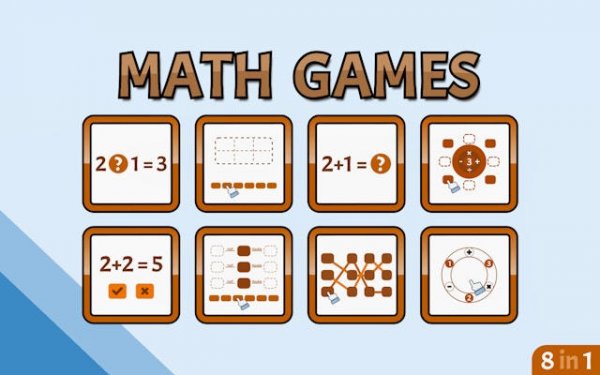
Number Crunch Challenge delivers exactly what its name suggests: repetitive arithmetic practice in a structured format. The eight modes let players isolate specific operations, while progressive difficulty and progress tracking provide a sense of advancement. The on-screen keypad and immediate feedback keep sessions efficient. It lacks the variety of a full-fledged puzzle game, but for anyone wanting to improve calculation speed, it offers a straightforward, low-distraction tool. The main limitation is that the input does not describe multiplayer or advanced features, so it is best suited to solo learners.
Number Crunch Challenge separates practice into eight modes, each targeting a specific combination of addition, subtraction, multiplication, and division. This structure lets players concentrate on one operation at a time or rotate through all four for a broader workout. Because each mode isolates different skills, sessions stay varied and players can direct effort toward the calculations that give them the most trouble.
Problems are ordered from simple to complex. Early questions might involve single-digit sums, while later stages require multi-step mental arithmetic. The gradual increase in difficulty is designed to build confidence without overwhelming the player. Over time, consistent practice supports faster recall and fewer errors, turning short daily sessions into measurable improvement.
After choosing a mode from the main menu, players answer each problem using an on-screen keypad. Correct answers trigger immediate positive feedback, and incorrect answers display the right answer. This clear feedback loop helps players recognize mistakes and reinforces learning. The interface is built for quick, distraction-free sessions, so players can focus on calculation rather than navigation.
The game records scores and completion rates for each mode, letting players see improvement over time and identify which operations need more practice. This turns regular play into a measurable habit and encourages setting personal goals. Short, frequent sessions tend to be more effective than long, occasional ones for building arithmetic fluency.
Sign in to comment
You must be logged in before posting a review or rating.
No comments yet. Be the first to comment!








Editorial Notes