 VividPlay Arcade
VividPlay Arcade
VividPlay Arcade
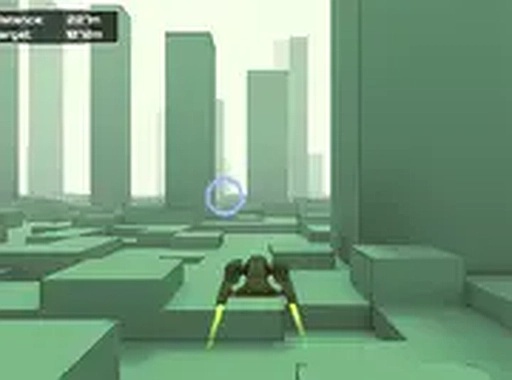
Neon Skyline Speedway works because its central twist—buildings that reposition mid-run—forces active reading of the path rather than memorization. The orb economy gives each attempt a second goal beyond survival, and the upgrade shop turns collected credits into longer runs. The global leaderboard adds a clear benchmark. The main limitation is that the input describes only distance and orb scoring, so players wanting varied modes or deep customization may find the scope narrow. Best suited to desktop players who enjoy reflex-driven arcade challenges.
The central task is piloting a spacecraft through gaps between towering skyscrapers. What separates this from a static obstacle course is that the buildings move. As a run progresses, structures slide and reposition, so the safe line you took seconds ago may close without warning. You are not memorizing a fixed track; you are continuously reading the next few seconds of geometry and adjusting your trajectory. That constant rearrangement is the game's main source of tension and replay value.
Glowing blue orbs sit along the flight path and act as the only currency. Each one adds to your credit total, which you then spend in the in-game shop on spacecraft performance parts. The two upgrade directions mentioned are maneuverability and resilience. Maneuverability matters more as building movements become harder to dodge; resilience buys you a margin for the collisions you cannot avoid. Because speed and obstacle complexity climb over time, upgrades are not optional extras—they are the difference between a short attempt and a long one.
Built with Unity WebGL, the game runs 3D graphics directly in a browser without a download. The city uses vibrant neon colors and reflective surfaces, and the frame rate holds steady even during high-speed sections. Full-screen mode is available, and the game is optimized for desktop computers. The presentation is clean and family-friendly, with no dark or mature themes.
A global leaderboard records the best distances reached by all players. Your own best run saves automatically, so you can return and try to beat it. The scoring system rewards both distance and orbs collected, which creates a steady risk-and-reward decision: chase a cluster of orbs near a closing building, or play safe and lose the credits. As speed increases and obstacle patterns grow more complex, sustained concentration and quick hand-eye reactions become the deciding skills.
Sign in to comment
You must be logged in before posting a review or rating.
No comments yet. Be the first to comment!







Editorial Notes