 VividPlay Arcade
VividPlay Arcade
VividPlay Arcade
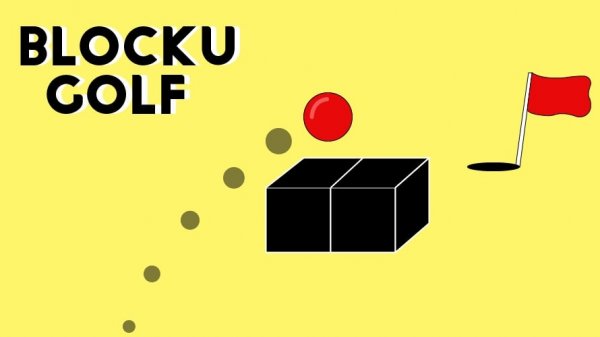
Bounce Blocku Golf Puzzle takes the aim-and-release rhythm of golf and adds a layer of spatial planning: the hole is rarely in a straight line, so you bounce the ball off walls and barriers to reach it. The drag control is the same on desktop and mobile, which keeps the learning curve shallow. Colorful graphics and smooth physics make failed shots informative rather than frustrating. It suits casual players who want short sessions, though anyone expecting direct-shot golf may need to adjust. The main limitation is that the input does not describe progression systems, so the long-term draw depends on level variety.
The entire control scheme rests on one gesture: click or touch, drag to set direction and strength, then release. A longer drag produces a harder throw; the angle you pull determines the ball's initial trajectory. Because the ball keeps its momentum after impact, the same drag can produce very different results depending on where it first hits a wall. That single input carries more weight here than in a typical golf game, where you often aim directly at the target. In Bounce Blocku Golf Puzzle, the first contact point usually matters more than the final direction.
Each level presents a different arrangement of walls, barriers, and moving elements. The hole is rarely reachable in a straight line, so you plan a route that uses one or more bounces to redirect the ball. A shot that looks like a miss can carom off a side wall and roll into the cup. The challenge is reading the layout before you throw: which surface to hit first, at what angle, and with how much force. Moving elements add timing to that equation, since a barrier that shifts position changes the rebound angle from one second to the next.
There is no download and no account required. The game runs in a web browser and on Android devices, which makes it suited to a few minutes of play between other tasks. Colorful graphics and smooth physics keep the feedback readable—you can usually tell why a shot failed by watching the ball's path. The difficulty comes from precision rather than complexity, so new players can clear early layouts while still finding tougher arrangements later. Golf fans will recognize the aim-and-putt rhythm; puzzle players will recognize the trial-and-error loop.
Sign in to comment
You must be logged in before posting a review or rating.
No comments yet. Be the first to comment!





Editorial Notes