 VividPlay Arcade
VividPlay Arcade
VividPlay Arcade
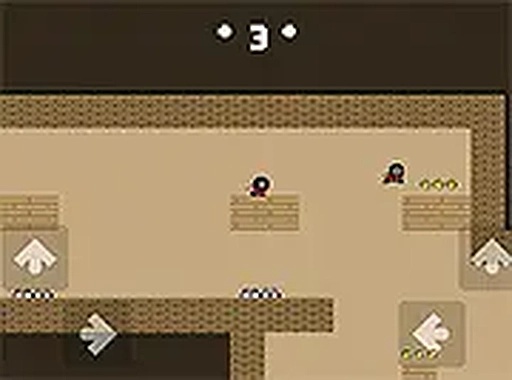
Twin Keys Puzzle Retreat targets pairs who want a calm, local cooperative experience. Its strengths are the shared-keyboard setup, the absence of time pressure, and room designs that require mutual assistance rather than individual skill. The game suits siblings, friends, and families, especially those new to co-op play. The main limitation is that it is built for two players on one device, so solo play is not the intended experience.
Twin Keys Puzzle Retreat is built around local cooperation. Two players share a single keyboard: one moves and jumps with WASD, the other with the arrow keys. No extra hardware, downloads, or installations are required because the game runs in a web browser. Full screen mode is available, and the interface stays clean with clear visual cues for interactive objects. On tablets or phones, on-screen controls make the same cooperative setup possible.
Each room asks the pair to work as a unit. One player might reach a high ledge while the other activates a nearby mechanism. Constant proximity and mutual assistance are central, so success depends on clear communication and coordinated timing. The game avoids harsh punishment for individual mistakes, which keeps the focus on solving problems together rather than reacting to failure.
The house is divided into distinct areas, each with its own layout and set of challenges. Players search for two keys that unlock the path forward while collecting coins scattered around. Some rooms feature moving platforms; others have gaps that require precise jumps. Careful observation and planning are rewarded, and because there is no time pressure, pairs can discuss the best approach before moving.
The visual style is bright and inviting, with a whimsical take on the house setting. Characters are expressive and easy to distinguish. There is no combat or time-based stress, making the game suitable for siblings or friends of different skill levels. Puzzles are designed to be solvable through discussion rather than trial-and-error frustration, creating a positive environment where patience, listening, and shared problem-solving matter.
Sign in to comment
You must be logged in before posting a review or rating.
No comments yet. Be the first to comment!








Editorial Notes