 VividPlay Arcade
VividPlay Arcade
VividPlay Arcade
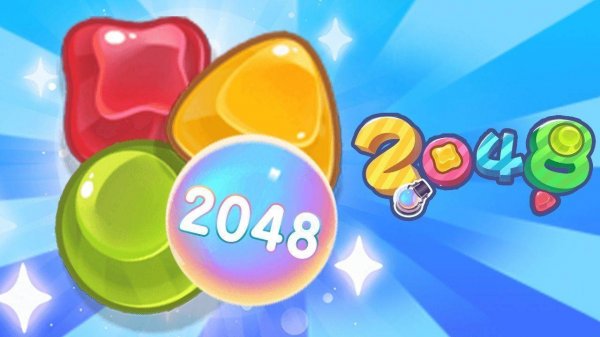
Merge Master 2048 takes the familiar 2048 formula and adds a skill bar with Shuffle, Protect, and Hint, giving players tools to recover from crowded boards without removing the need for planning. The bright, readable tiles and smooth movement suit quick sessions and younger players. Difficulty scales as the grid fills, which keeps later runs demanding. The main limitation is that the source does not describe post-2048 content, platform support, or multiplayer, so those remain open questions.
Merge Master 2048 follows a straightforward rule: slide numbered tiles across a four-by-four board using swipes or arrow keys. When two tiles share the same number and touch, they merge into a single tile worth double. The stated objective is to produce a tile showing 2048. Because every swipe shifts the entire row or column, each move reshapes the board and limits or opens future merges. That tension between a simple input and long-term consequences is the core of the puzzle.
What separates this version from a bare number-merge game is a skill bar that fills gradually during play. Three abilities become available: Shuffle rearranges every tile on the board, which can break up a deadlock; Protect locks a chosen tile in place so it cannot merge unintentionally; Hint highlights the most advantageous move at any moment. Timing matters more than frequency. Shuffle is most useful when the grid is too crowded for any productive move, while Protect is best spent on high-value tiles that feed into larger numbers.
Difficulty rises naturally as higher-value tiles accumulate and empty spaces shrink. Early moves happen quickly because the board is open; later stages demand careful planning to avoid getting stuck. The skill system softens bad situations without removing the need for thoughtful play. Keeping merges concentrated in one area is a practical habit, since a scattered board leaves fewer lanes for future combinations. Regular play builds intuition for predicting how tiles shift after each swipe.
The interface uses clean, bright colors that keep numbers easy to read at a glance, and tiles shift smoothly to give clear feedback for each action. The layout avoids clutter so attention stays on the puzzle. That readability makes the game approachable for children learning numbers as well as adults looking for a mental workout, though the difficulty still scales for players who push toward 2048.
Sign in to comment
You must be logged in before posting a review or rating.
No comments yet. Be the first to comment!






Editorial Notes