 VividPlay Arcade
VividPlay Arcade
VividPlay Arcade

Playground 3D: Tactical Commander targets players who want tactical decision-making without a heavy time commitment. Its strength lies in the unit investment system, where every purchase shapes your team's balance and forces you to adapt to changing scenarios. The gradual difficulty curve and browser accessibility make it approachable for casual players, while the resource management layer gives strategy fans something to sink into. The main limitation is that the input describes a fairly standard tactical framework without detailing unique modes or mechanics beyond unit selection and positioning.
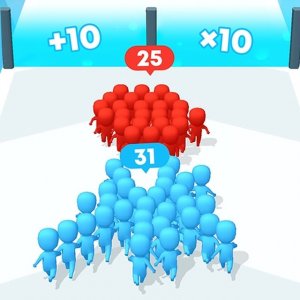
Your primary job in Playground 3D: Tactical Commander is to assemble a team by investing in different unit types. Each purchase changes the composition and overall strength of your group, so no two lineups behave the same way. Because the game emphasizes balance, loading up on a single unit category can leave you exposed when a scenario demands a different approach. The core loop asks you to weigh immediate needs against long-term flexibility.
Matches unfold on screen with units you move using the keyboard or mouse. You interact with the environment, respond to events as they appear, and work toward each round's objectives while dealing with obstacles and opponents. Positioning and timing matter as much as raw unit count. The visual design deliberately highlights hazards and bonuses, so scanning the field before committing to a move is a habit worth forming early.
The game supports both quick browser sessions and longer play periods, and it runs without any download. Difficulty ramps up gradually, introducing new scenarios that test resource management and your ability to adjust when conditions shift. Optional rewards sit alongside primary objectives, and chasing them too early can cost you the round. Early stages double as low-pressure practice for controls and timing.
Casual players can pick up the basics quickly, while anyone who enjoys deeper tactical planning will find enough complexity to stay engaged across repeated attempts. Scenarios and opponents change between sessions, which keeps replay value high. A reward system tracks completed goals and personal records, giving steady players something concrete to aim for beyond simply finishing a match.
Sign in to comment
You must be logged in before posting a review or rating.
No comments yet. Be the first to comment!








Editorial Notes