 VividPlay Arcade
VividPlay Arcade
VividPlay Arcade
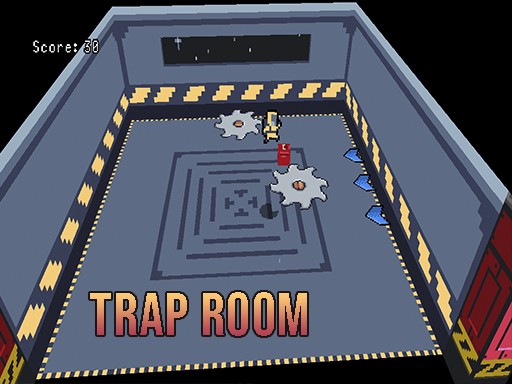
Treasure Room Puzzle Challenge keeps its scope tight: collect boxes, dodge predictable obstacles, unlock the exit. The fixed obstacle patterns make each room a planning exercise rather than a test of reaction speed. Bright visuals and mouse-or-keyboard controls lower the barrier for younger players. The main limitation is variety—rooms change layout, but the core loop stays the same. Best for players who enjoy short, low-pressure puzzles.
Each room in Treasure Room Puzzle Challenge presents a self-contained puzzle. Your task is to collect every treasure box scattered across the space. The exit remains locked until the last box is picked up, so you must clear the room completely before moving on. Because every room introduces a fresh layout and a different arrangement of moving obstacles, the game never falls into a predictable rhythm.
Obstacles follow fixed patterns, which turns each room into a test of observation and timing rather than reflex alone. You can watch an obstacle's path before stepping into its range. Touching one sends you back to the start of that room, so a little patience goes a long way. The challenge comes from reading multiple patterns at once and finding the safe windows between them.
Movement uses simple mouse or keyboard inputs. There are no complex combos or hidden mechanics, so anyone can start playing within seconds. The 3D presentation and smooth controls keep navigation comfortable, while the bright, colorful visuals make the game inviting for children and adults alike. Levels are short by design, which suits quick breaks or longer sessions.
Rushing usually leads to a restart. A better approach is to pause, trace the obstacle routes, and decide the order in which to collect boxes. Sometimes the safest box is not the closest one. Because the game avoids violence and inappropriate content, it works as a light cooperative activity for families or a solo wind-down puzzle.
Sign in to comment
You must be logged in before posting a review or rating.
No comments yet. Be the first to comment!









Editorial Notes