 VividPlay Arcade
VividPlay Arcade
VividPlay Arcade
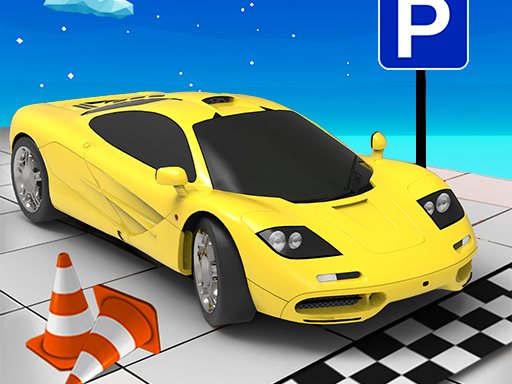
Precision Parking Simulator is a no-frills driving simulation built around one task: parking without contact. Its strength is the gradual difficulty curve, moving from simple spots to reverse and angled layouts that demand planning. The reset-on-contact rule creates a puzzle-like rhythm. It suits players who prefer calm, precision-based challenges over racing or open-world driving. The main limitation is scope: it does not simulate traffic, weather, or vehicle damage, so it stays strictly within parking scenarios.
Precision Parking Simulator places you behind the wheel with a single clear task: guide a car into a marked parking area without touching cones, walls, or other vehicles. The game uses a 3D view and responsive controls to make each attempt feel like a practical test of spatial awareness. Contact with any obstacle resets the level, so every movement matters. The challenge is not speed but accuracy, and the game rewards patience over rushed inputs.
Players typically use arrow keys or on-screen buttons. Forward and reverse move the car along its current heading, while left and right steering adjusts alignment. Because the car does not pivot in place, you must plan turns in advance and make small corrections. Reversing into a spot requires checking both sides and judging distance without a physical reference point. The reset-on-contact rule turns each level into a short puzzle where the sequence of moves matters as much as the final position.
Early levels use simple, straightforward spots that let you learn the steering behavior. As you advance, the game introduces tighter spaces, reverse parking, and angled spots. These layouts demand different approaches: angled spots may require a wider entry arc, while reverse parking forces you to rely on mirrors or visual markers. The difficulty increases gradually, so each new layout builds on skills from the previous one without sudden spikes.
Clear visual markers identify parking spots and obstacles, which helps you judge alignment from the 3D perspective. The graphics are designed for readability rather than realism, keeping the focus on spatial relationships. The game contains no violent or inappropriate content and is suitable for all ages. It functions as a low-pressure way to practice precision driving, though it does not replace real-world instruction or account for vehicle physics beyond what the simulation provides.
Sign in to comment
You must be logged in before posting a review or rating.
No comments yet. Be the first to comment!









Editorial Notes